Reading, Respect and Relationships
The 3 Rs guiding State Superintendent Lindel Fields' first year in office

When Oklahoma’s new state superintendent talks about his first months in office, he doesn’t start with policy or politics. He starts with people.
Gov. Kevin Stitt appointed longtime career tech administrator Lindel Fields to fill former State Superintendent Ryan Walters’ remaining term. Fields has sought to distinguish himself from his predecessor, perhaps most in the realm of demeanor.
“A sense of calm and a customer service‑oriented tone,” Fields said, describing what he hopes Oklahomans notice first in his approach. After years of turbulence inside the Oklahoma State Department of Education, he’s betting that tone can reset the entire system.
He calls it “proximity leadership.”
“You have to be in proximity to those you lead,” he explained, a philosophy that has guided his first six months. He’s spent that time walking hallways, meeting staff, visiting districts and showing up at Rotary lunches and community events. The goal is simple: rebuild trust one conversation at a time.
It’s a striking shift from the combative posture that defined the previous administration.
“We confuse dissemination of information as communication,” he said. “Communication is two‑way.”
That belief has shaped everything from his weekly statewide memo to the virtual calls with superintendents. More than 400,000 people receive his updates, and he sees each message as a small step toward repairing relationships with districts. First comes communication, then relationships. Trust comes last.
But tone alone won’t fix Oklahoma’s education challenges. The superintendent’s leadership style is being tested against Oklahoma's tough budget and education realities.
His budget request totaled roughly $4 billion, similar to last year’s, but the stakes felt higher. Oklahoma ranks near the bottom nationally in both per‑pupil spending and starting teacher pay. He doesn’t sugarcoat it. “We owe it to the students to get that funding up as soon as possible,” he said.
(Stitt has since signed the fiscal year 2027 state budget. It spends nearly $4 billion on common education, including $85 million for pay raises and $80 million for reading and math interventions.)
Fields’ top three priorities are clear: school security, teacher pay and literacy initiatives. Three years ago, lawmakers provided about $90,000 per school for security upgrades. For large districts, that money disappeared quickly; for small ones, it proved critical. The recently signed budget provides $50 million for school security.
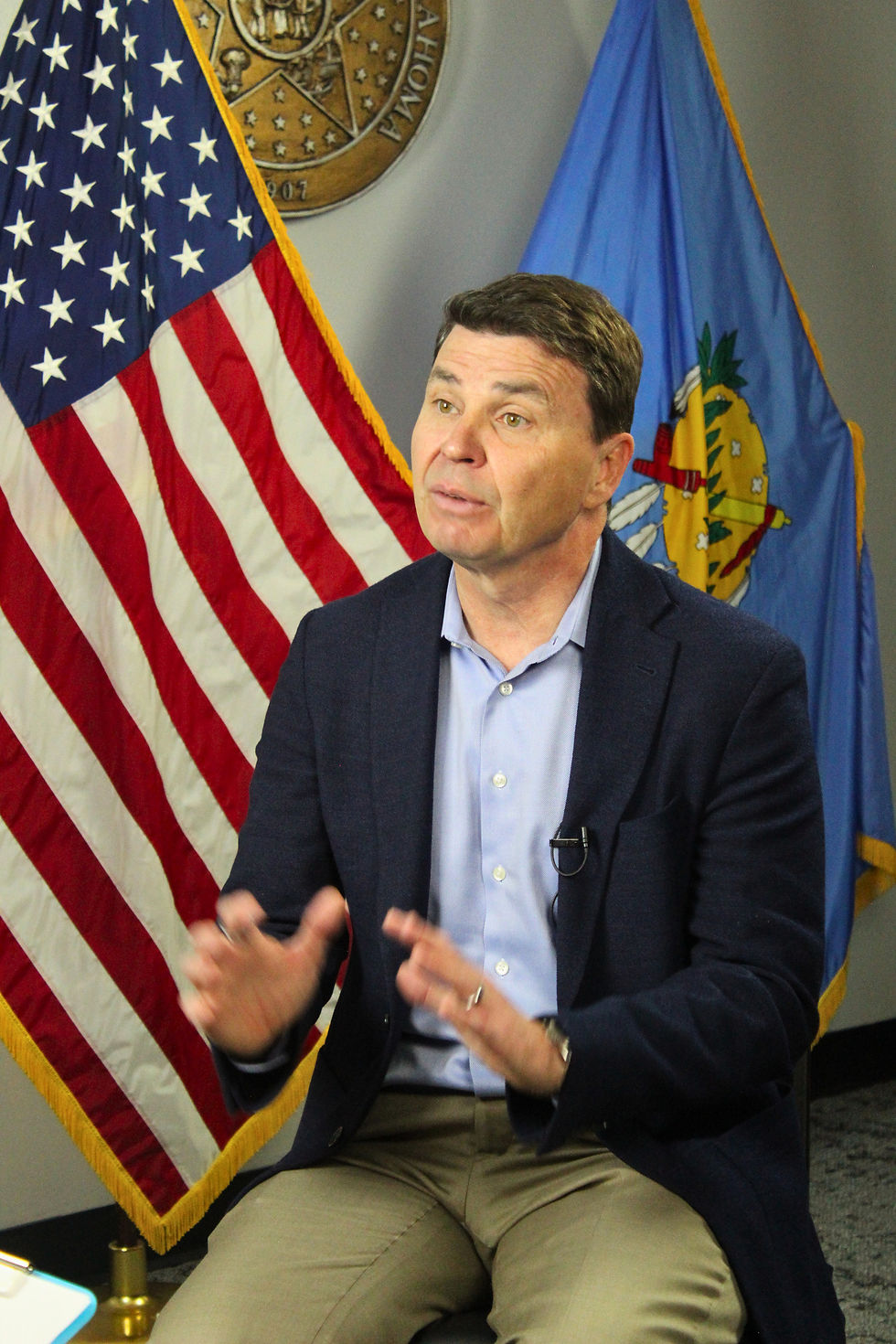
Teacher pay is next. The Legislature approved an across‑the‑board raise, but Fields would like to see Oklahoma consider teachers holistically. Recruitment and retention start with compensation but don’t end there. “Pay won’t do it alone,” he said. “Culture won’t do it alone. Respect won’t do it alone. But when you put all three together, we can begin to see the kind of progress we all want.”
Then comes literacy. He calls it the “Mississippi Marathon,” a nod to the long‑term, science‑of‑reading reforms that helped Mississippi climb national rankings. “It’s not a miracle,” he said. “Miracles can’t be explained. This can.” But he’s realistic: Oklahoma won’t see dramatic reading gains in nine months. What he can promise is teacher training, literacy coaches and a statewide push toward evidence‑based reading instruction. But Fields also understands the concept of limitations.
“When you try to be everything to everybody, you can’t be anything to anybody. ... I’m of the opinion that less is more,” he said.
For all the numbers and legislative debates, the superintendent keeps returning to the people behind the system. “There’s nothing more noble than being a teacher,” he said. He believes Oklahoma must restore educators’ sense of pride to keep them in classrooms.
He imagines regional hubs where teachers and principals can access high‑quality training. Not new buildings, necessarily, but a new purpose. A place where educators feel supported.
Getting literacy coaches and training to some rural areas will take time, coordination and funding. “We want a literacy professional in every school,” he said.
He also pushed back against the idea that schools alone are responsible for reading scores. “We all collectively have to accept responsibility,” he said. Students are arriving in pre‑K and kindergarten less prepared than they were a decade ago.
That’s not a school problem, he argued. Instead, it's a societal one, he said.